
What Is Staircasing in a Help to Buy House?

Help to Buy and Shared Ownership schemes can sometimes be over-complicated with different terminology. Staircasing is one of the terms that some people struggle with, and a lot of the rules and regulations surrounding it can be equally confusing. Luckily, once the information is broken down it becomes much easier to understand.

So what is staircasing in a Help to Buy house? In a Help to Buy scheme, staircasing is the term used for buying more shares in the property. Buying more shares means that you’ll pay less rent on the ones that you don’t own. You’ll potentially be able to reach 100% of the total shares and own the property outright.

Read on to learn more about staircasing, how many shares you can buy, whether you need a deposit, and what a Shared Ownership valuation is.

What Is Staircasing?

If you’ve purchased your home through a Help to Buy or Shared Ownership scheme, you can usually choose to buy more shares in it after you’ve lived there for a certain amount of time. This is what’s referred to as ‘staircasing’. These payments can be made either from your savings or through the help of a mortgage.

The advantage of this is that when you buy more shares, you’ll pay less rent. This is because the amount of rent that you pay will be based on the landlord’s share of the property. If you manage to staircase your way all the way up to 100%, you’ll own your home outright and won’t have to pay rent anymore.
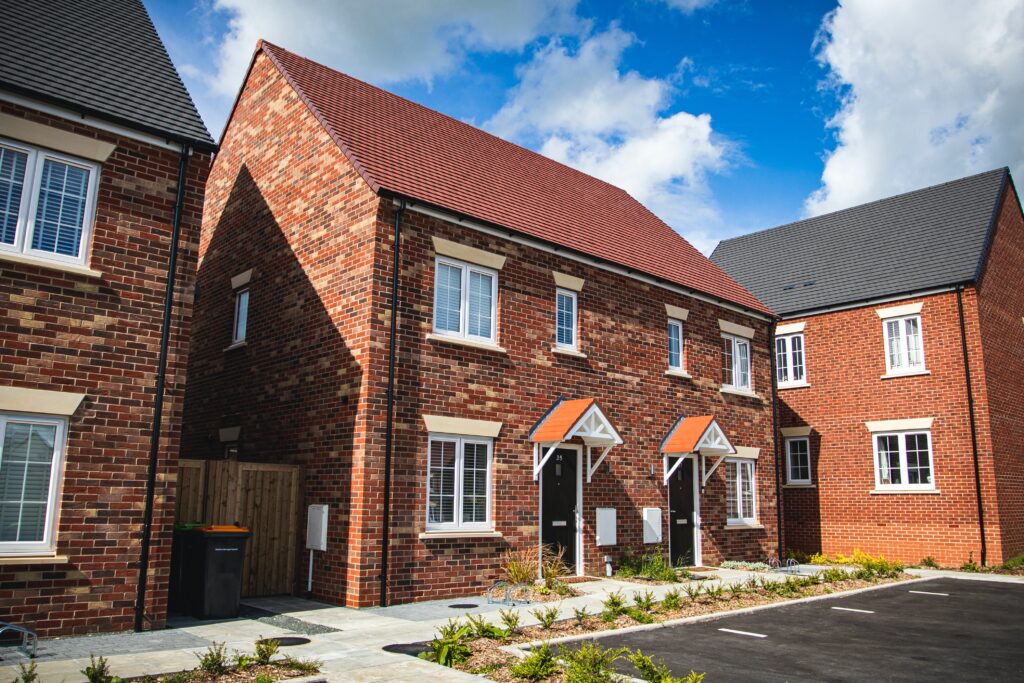
new build property semi detatched

How Many Shares Can I Buy?

The maximum share is 100%, at which point you own the property outright. However, in some places called ‘designated protected areas’, you might only be able to buy up to 80%. These areas were set up to ensure that rural affordable housing remains in the ownership of local people. There are also Older Persons Shared Ownership (OPSO) homes where the maximum share is 75%. With this, you’ll never outright own the property, but once you reach 75% you won’t have to pay rent on the rest.

There is a minimum amount of shares that you can buy in one go. This is dependent on when you bought the property and what your contract says – so ask your landlord if you’re unsure. We’ve broken down the minimum share amount for each purchase below:

5% Or More

In the majority of cases, you’ll be able to buy shares of 10% or more at any time. In some older leases, you may only be able to buy shares of 25% or more, and in newer leases you might be able to buy shares of 5% or more. As mentioned above, all of this is dependent on when you bought the property and what you agreed to in your contract, so be sure to read that before doing anything.


Shares of 1%

If you purchased your home on or after the 1st April 2021, then for the first 15 years you might be able to buy shares of 1% a year. Speak to your landlord to find out if this applies to you. This only applies to shares of 1% and you’re unable to buy shares of 2%, 3%, 4%.

Before you purchase a Shared Ownership home, you should always ask the landlord for all of the important information regarding share amounts you’ll be able to buy in the future. This should be in the ‘key information document’ that will be provided before you buy the property.

Do I Need a Deposit for Staircasing?

You don’t need to wait until you can save up for a deposit so that you can mortgage more shares because you can use your existing equity in your share of the property to act as a deposit. If you do have savings then an effective way to buy an even bigger share is to combine them with the equity in your home, this will allow you to staircase faster and pay less rent in the meantime.

a desk with a laptop, paperwork and cup of coffee.

What Is a Shared Ownership Valuation?

A Help to Buy valuation is needed when buying more shares or selling a home bought via the Help to Buy scheme. The purpose of getting a valuation is to assess the market value of the property at the time, because since you initially bought the property the value is likely to have changed. There are certain conditions that need to be fulfilled when carrying out a Shared Ownership Valuation:

  • The valuation must be carried out by a Royal Institution of Chartered Surveyors (RICS) Registered Valuer.
  • The valuer must be independent of an estate agent.
  • The valuation report must be on headed paper, and must also be signed by a RICS Registered Surveyor.
  • The valuer must provide at least three comparable properties and sale prices.
  • The three comparable properties must be similar in terms of size, age, type, and must be within a 2-mile radius to the property being valued.
  • The valuer must not be in any way related or known to the client.
  • The valuer must inspect the property interior, and provide a full valuation report.

Once the valuation has been completed, you will receive a completed report. The report will include a thorough room inspection with photographic evidence, details of the properties condition and any defects. You’ll also receive details of any nearby properties that have been sold in the last 12 months and information about the location and surrounding area.

Shared Ownership Valuation With Crest Surveyors

Our helpful and experienced team of RICS qualified surveyors are ready to help you on your journey to buying or selling your property. We offer affordable service around London and the home counties, with a quick and reliable service to help you through the process.

To learn more about our Shared Ownership Valuations, simply get in touch. Or for more information on the services we have to offer, visit our website.

Is Buying a Shared Ownership Property a Good Idea?

The UK’s shared ownership scheme was introduced in the 1980s, but has become increasingly more popular over the last five years, especially in relation to purchasing a new build property in a Government-backed project. The scheme allows those who may find it difficult to get on the property ladder the opportunity to purchase a home through a part ownership, part rent strategy. In other words, you own a certain percentage of the property, and pay rent on the remaining percentage. 

But, is buying a shared ownership property a good idea? If you’re looking for a more affordable means to purchase your own home, then exploring your options with a shared ownership scheme is a good idea. However, before you purchase a new home, you’ll need to ensure that you check for hidden costs such as maintenance fees or service charges, which may increase your monthly outgoings. 

A RICS registered surveyor will be able to help and advise you further on the shared ownership scheme, what it could mean for you and investigate any potential issues with your property with a survey. To help you learn more about what shared ownership means for you, we’ve explained all the essential information below. Simply keep reading to learn more. 

Is it worth buying a shared ownership property?

If you’re looking for a way to jump onto the property ladder, but can’t borrow enough for a mortgage in the current market, then shared ownership offers you an opportunity to purchase a percentage of a property instead. From here, you pay a mortgage on the percentage that you own, and pay rent on the remaining share. Because of your reduced mortgage, you also pay a reduced deposit, meaning that the costs are lower to purchase a home. This makes this scheme a more affordable option for those looking to buy a home. 

With a shared ownership, you also have the potential to buy more shares of your property if you desire. This is a process known as ‘staircasing’, which means that you work your way towards owning the whole property, although this isn’t a requirement. It’s worth noting that the process of purchasing more shares can be costly and complicated; it is likely that you will need the guidance of a RICS Chartered Surveyor to help you. 

How does the shared ownership scheme work?

Typically, with the shared ownership scheme, you will be able to purchase a share of the home between 25% and 75%. A bank, housing association or private developer will own the remaining percentage, and you will pay rent to them. The rent you pay will be no higher than 3% of the value of the percentage that the landlord owns. For example, if you own 40% of a home worth £200,000, then each year you will pay £3,300 of rent, equal to £275 a month. Further details on renting costs can be found on the GOV UK website. 

Do shared ownership properties increase in value?

As with non-shared ownership properties, the value of your house will increase or decrease in line with the current housing market. If the housing market increases, then so will the overall worth of your percentage share. If you are considering selling your shared ownership property, then the value of which your share is worth will be determined by a RICS Chartered Surveyor. 

When does the shared ownership scheme end?

As it stands, the current Government-backed scheme does not have an end date. However, most shared ownership properties are leasehold, meaning that you simply have the right to ‘occupy’ the home, and do not own the land forever. Most leasehold agreements are between 99 years to 125 years, meaning that the end of your lease agreement should not be a factor of concern during your ownership. This is especially the case in relation to new build properties. To learn more about your lease agreement, or to have one of our expert team members calculate your leasehold end date in any London-based property, simply get in touch with one of our trustworthy RICS Chartered Surveyors. 

Crest Surveyors are here to help

If you’re in London, and you’re seeking more guidance or information on your shared ownership property, simply reach out to one of our RICS-qualified team members today. We offer affordable and reliable services to ensure that your purchase, remortgage or staircasing opportunities for your shared ownership property goes smoothly. Simply get in touch to learn more about how we can help you. 

Can you sell a Help to Buy property within 5 years?

In 2013, the UK government introduced a new Help to Buy scheme that supported the mission of first time buyers to purchase their first home. This scheme included an equity loan, which allowed buyers to purchase a property with only a 5% deposit, as the loan provided cover from 5% to 20% of the purchase price. Once the sale of the house was completed, the buyer was then provided with 5-years free payments on the equity loan. 

So, what happens if you decide to sell your Help to Buy property within those first 5 years? If you took out a 20% equity loan and decided that you’re going to sell your Help to Buy property within 5 years, then you will need to pay back the Homes and Community Agency (HCA) 20% of the house value. 

This is completed at the time you sell your home so that the HCA is repaid for the money they loaned to you. We can understand that this is a complex process, so to answer your questions we’ve put together this short guide to explain how to sell your help to buy property within the first 5 years. 

Simply keep reading to learn more. 

Can I sell my Help to Buy property within 5 years?

Yes, you have the freedom to sell your property within the first 5 years of ownership if you purchased your home using the Help to Buy scheme. The main reason why the first 5 years of ownership is interest free on your equity loan is to provide you with a chance to pay back as much of the loan as possible before interest accrues. If you decide to sell before you’ve paid back your loan, then you will be required to pay back the percentage value of the loan from the overall sales cost. 

For example, if you paid a 5% deposit on your home, and had a 75% mortgage, then you would have borrowed a 20% equity loan to cover the remaining cost of purchasing the property. If you sold your house before paying back the full amount of the loan, then you will need to pay back 20% of the house value at the time that you sell. For a house that’s worth £180,000, this amount would be £36,000. 

How does the Help to Buy scheme work? 

The concept of the Help to Buy scheme was to allow first time buyers to jump onto the property ladder with a small 5% deposit. Typically, to purchase a property you will need a deposit of 10% or above. For a house that’s worth £450,000, which is the maximum amount you can purchase for using Help to Buy in London, the deposit would amount to £22,500, compared to a minimum 10% deposit which would be required without this scheme (£45,000). 

With this help, you could then purchase a new build home, a home through shared ownership, or contribute towards the cost of building a new home. 

The Help to Buy scheme closed to new applications on the 31st of October 2022, with it formally ending in the UK on the 21st of March 2023. 

What do I have to pay back if I’m selling my Help to Buy property?

You may be confused about the different types of costs that you will need to pay if you’re considering selling your Help to Buy property. Your equity loan will be the main cost that will need to be repaid. For more information on how much you have to pay, or to access an online calculator, explore the HCA website

What happens if my Help to Buy house is worth less than what I bought it for?

There are various internal and external factors that contribute towards your house decreasing in value from the time you purchased it. This could include rising interest rates, events within the local area, damage to the property, and more. So, in the instance where your house is now worth less than the price you bought it for, what happens to paying back your equity loan?

If you sell your house before paying back your equity loan, then you will pay back the percentage of the loan you borrowed at the house’s current market value. In other words, if you bought a property for £450,000 in London with a 20% equity loan from the Help to Buy scheme, and the price of the property fell to £420,000, then you would pay back 20% of the new valuation price, and not the price you bought the house for. 

Who do I need to contact if I want to sell my Help to Buy home?

One of the most important factors to keep in mind when selling your property within 5 years, is that you will need your house survey and valuation to be completed by a RICS qualified surveyor. This is to ensure that valuation is accurate, and checks every detail required to provide the most thorough cost estimate. 

Why choose Crest Surveyors?

At Crest Surveyors, all of our surveyors are members of the Royal Institution of Chartered Surveyors (RICS), providing RICS property valuations and property surveys . This means that not only do you receive a service second to none, but also receive the quickest and most cost-effective solutions for your survey and valuation needs. 

Do I Need a Surveyor For Shared Ownership?

Purchasing or selling properties for the first time can be complicated, nevermind when you are under a shared ownership. As such, it is important to know the legal requirements regarding chartered surveying when you are under a shared ownership.  In this article, we discuss whether or not you actually need a surveyor for shared ownership. 

So, do I need a surveyor for shared ownership? If you own a property under a Help to Buy Scheme or Shared Ownership Scheme, and are looking to sell your shares or purchase more shares, you will need a surveyor. It is a legal requirement that a RICS chartered surveyor completes an independent valuation on shared ownership properties to justify the value before moving forward. 

Keep reading to learn more about surveys for shared ownerships, including what a shared ownership valuation involves, and what happens if you don’t agree with the lender’s valuation. 

Page Jumps:

Do I Need a Surveyor For Shared Ownership?

What is a Shared Ownership Valuation? 

What does a Shared Ownership Valuation Include? 

What Happens if You Don’t Agree with the Lenders Valuation? 

Do I Need a Surveyor For Shared Ownership?

If you have purchased a property under a shared ownership agreement, such as a Help to Buy Scheme, and are wanting to sell it, or want to buy more shares in the property (also known as staircasing), you will require a valuation. In this case, it is a legal requirement that the property must be surveyed by a RICS registered surveyor. This will ensure that an independent valuation is provided for the property and factored into the mortgage valuation when the property is sold. 

If you wish to sell off, or buy more shares in your property, the chartered surveyor completing the valuation must be registered under RICS. This is important because it will ensure that a valuation is formed with no bias towards either party. The RICS’s qoverning body is a globally recognised governing body, that promotes some of the highest standards in property surveying, so you can be confident that you will be receiving a fair and accurate valuation on your shared ownership property. The Government normally part-owns shares within Help to Buy properties, therefore they will arrange their own surveyor to visit your property to calculate a valuation. It is important that you arrange for an independent surveyor to complete a valuation on your behalf, to cross reference against the other party’s valuation.

What is a Shared Ownership Valuation? 

A shared ownership valuation is an independent valuation that is completed when someone wishes to buy more shares of, or completely sell their property, which falls under a Help to Buy Scheme or a Shared Ownership Scheme. The valuation takes into consideration the condition of the property and other aspects such as the area, to calculate a numerical value for the property. From this, an agreement can be formed, and a price can be offered for the buyer to purchase more shares in their property or for them to sell their property. 

What does a Shared Ownership Valuation Include? 

When a shared ownership valuation is completed accurately, it takes into account a variety of factors which are then used in the calculation of the valuation. It is important that each of the factors are considered properly because if one is missed out it may significantly affect the figure of the valuation, which may result in the owner paying more for additional shares than they should be. Below we have detailed the main factors that should be considered in a shared ownership valuation. 

Inspection of the Location and Construction of the Property: A local chartered surveyor will be required to complete an inspection of the location and construction of the property. This can include assessing the local amenities, landmarks, and transportation accessibility as well as recognising any key issues with the structure of the property. These two factors can alter the value of the surveying significantly, especially if the area is well-known for crime or the property has a serious structural issue that could affect the future of the property. 
Overview of the Properties General Conditions with Photos Taken:A local chartered surveyor will be required to complete an inspection of the location and construction of the property. This can include assessing the local amenities, landmarks, and transportation accessibility as well as recognising any key issues with the structure of the property. These two factors can alter the value of the surveying significantly, especially if the area is well-known for crime or the property has a serious structural issue that could affect the future of the property. 
Details of 3 Similar Nearby Properties: As part of the shared ownership valuation, the chartered surveyor will also need to identify 3 similar properties in the area that are close in size, age, and type. The 3 properties must also be within a 2 mile radius of the property being valued to ensure that there is a realistic comparability between the locations of the properties. By identifying 3 similar properties in the area, the surveyor will have some guidance on what similar properties are valued at and this can be very useful in calculating the property valuation. 
Valuation of the Property:Once all of these factors have been considered, the RICS chartered surveyor will come to a decision on a valuation of the property. This should include a detailed description of any issues found in the property alongside evidence in the form of photographs. Assumptions made on the property in terms of area or structural problems such also be explained in this section too. 

What Happens if You Don’t Agree with the Lenders Valuation? 

In most cases, under a shared ownership valuation, the chartered surveyor will come to a similar valuation as the surveyors provided by the Government. However, on some occasions they may not agree, so it can be helpful to know what your options are. Below we have explained the options you have if you don’t agree with the valuation provided. 

Provide Evidence of 3 other Properties: 

If you do not agree with the valuation provided by the Government, one of your options would be to contest it by providing evidence of 3 other similar properties. These properties must be similar in size, age and location to be considered truthfully comparable, but if so they can be a great argument for disputing the lender’s valuation. 

Send the Valuation to the Government:

If the lender is from a private company, you can gather your evidence and send it across to the Government to be appealed. The Government can then assess the information and recommend an alternative valuation if they find it appropriate to do so. This may not work in your favour every time, but is still an option. 

Cease the Application and Request Another with a New Surveyor: 

If at this point you are still not pleased with the valuation you have received, you can cease your application and restart the whole process. This might seem like a tedious process but it means that you will be able to request a different surveyor. It is important to note that you cannot request a specific surveyor but you can request an alternative one. If you truly believe that the valuation is not accurate, then this can be a way of getting a different opinion. 

Shared Ownership Valuation Surveyors at Crest Surveyors

Crest Surveyors are experienced RICS registered chartered surveyors who can be trusted with RICs property valuations and Shared Ownership Surveying. Providing both independent and honest valuations for your shared ownership properties, means that you can feel confident when looking to sell or buy more shares in your property. 

If you are interested in our Shared Ownership Surveyor services, click here to find out more.